
Not every alcohol ink behaves the same way once it hits epoxy resin. Some bloom into gorgeous cell patterns and sink just enough to create real depth. Others float on the surface, fade under UV light, or turn muddy the moment two colors touch. From our team’s POV, finding the best alcohol ink for epoxy resin comes down to matching pigment type and concentration to what you are actually making.
And if you only have a minute, check out our recap on best alcohol inks for resin art:
- Best overall: Jacquard Piñata. Highly concentrated, transparent colors with a true sinking white, ideal for petri art, ocean pours, and resin lamps.
- Best premium choice: Ranger Tim Holtz Adirondack. The widest coordinated color range, favored for geode work where precise, matched shades matter.
- Best for beginners: Let’s Resin. Comes bundled with a sinking white and blending solution, built specifically around resin techniques.
- Best value: Limino. Strong pigmentation for the price, with a dual-white system that gives more control over how deep colors sink.
We tested and researched the alcohol ink brands that come up again and again in resin communities, from Etsy sellers to hobbyist forums, and evaluated each one against five factors that actually matter for resin work: pigment strength, color vibrancy once cured, ease of blending, value per ounce, and how predictably each ink behaves in common techniques like petri art, geodes, and ocean pours.
Now, let’s get to the details!
What are the Best Alcohol Ink Brands for Epoxy Resin?
Here is how the seven brands compare at a glance before we go into detail on each one.
| Brand | Best For | Pigment Strength | Beginner Friendly |
| Jacquard Piñata | Best Overall | Very High | Yes |
| Ranger Tim Holtz Adirondack | Premium Choice | High | Moderate |
| Let’s Resin | Best for Beginners | Moderate | Yes |
| Copic Ink (formerly Various Ink) | Best Professional Color Selection | High | Moderate |
| Limino | Best Value | Moderate to High | Yes |
| DecorRom | Best Budget Pick | Moderate | Yes |
| SigWong | Best Large Starter Set | Moderate | Yes |
1. Jacquard Piñata Alcohol Ink (Best Overall)
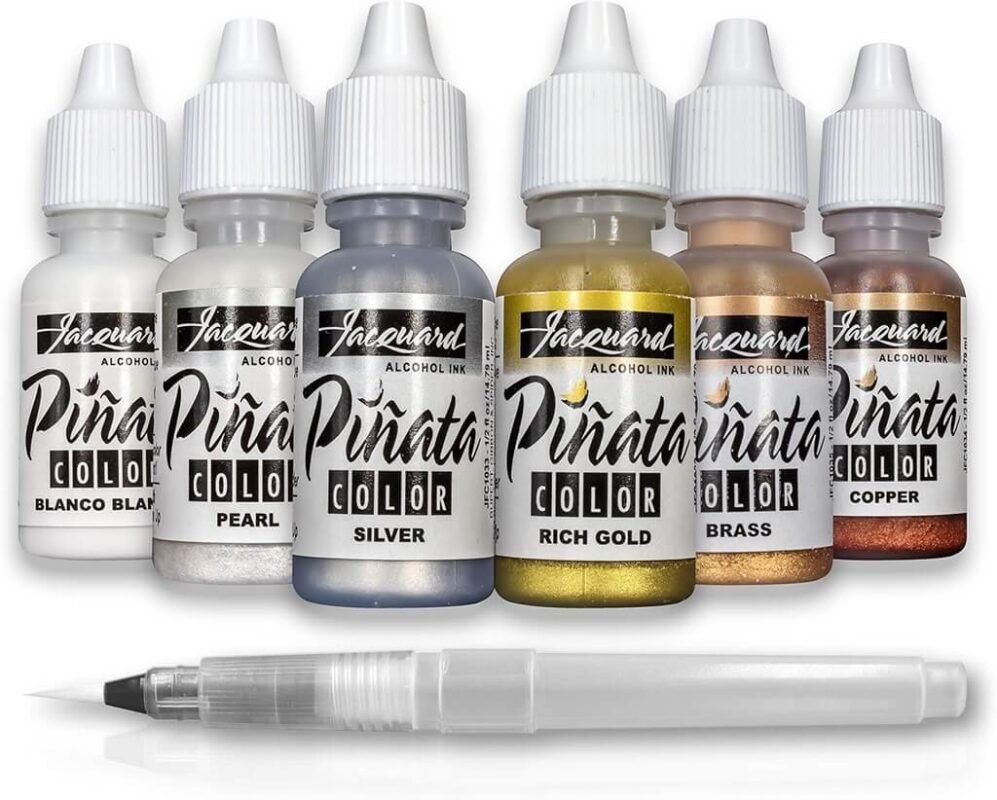
Piñata is widely regarded as the best alcohol ink for epoxy resin among artists who need both strong color and predictable behavior in a pour. Jacquard formulates Piñata with ethanol rather than the isopropyl alcohol most other brands use, which lets the ink carry more dye per bottle. In practice, that means Piñata colors go further, blend more predictably, and hold their saturation once sealed under resin instead of muting the way lower-pigment inks sometimes do.
About the brand
Jacquard has produced textile and surface design dyes for decades, and Piñata alcohol ink grew out of that same pigment chemistry expertise. It was not built as a resin-specific product. It was designed for fine art, fabric, and mixed media first, which is part of why the color range feels more considered than many inks marketed directly at resin crafters.
Reputation among resin artists
Piñata shows up constantly in resin lamp and petri art tutorials, largely because of one ingredient: Blanco Blanco. Unlike Piñata’s standard colors, which are dye-based and float, Blanco Blanco is pigment-based, so it sinks in resin and pushes other colors down with it. That single detail is the mechanism behind the layered, “petrified” look so many petri dish and geode pieces are built around.
What makes it stand out, the pros and cons
- The metallic colors use real metal pigment rather than a shimmer additive, so they read as genuinely reflective under resin
- Blanco Blanco doubles as both a standalone white and a tool for pushing other colors into sinking patterns
- The dye-based standard colors are highly transparent, which suits premium handmade resin lamps especially well since light needs to pass through the color. rather than bounce off it
Pros
- Strong, consistent pigmentation bottle to bottle
- Genuine sinking effect available through Blanco Blanco
- Transparent colors that let light through, ideal for lamp shells
- Dried ink can usually be revived with a few drops of isopropyl alcohol
Cons
- Pricier per bottle than most resin-marketed brands
- Only Blanco Blanco and the metallics sink; the standard color range floats, so layering technique still matters
- Smaller color range out of the box compared to large multi-bottle sets like SigWong
This alcohol ink is best for
Resin lamps, ocean art, and petri or geode pieces… It is also the ideal choice for anyone comparing the best alcohol inks for crafting a dreamlike galaxy resin lamp..
How the experience with this alcohol ink goes with resin projects
The ink pours cleanly from the dropper cap without the stringing some brands have, and colors mix cleanly when dropped into resin together rather than clouding into a muddy in-between shade. The main adjustment for first-time users is remembering that most colors will float unless Blanco Blanco is worked into the pour, so techniques that rely purely on gravity to create depth need to account for that.
Our recommended product lines
- Piñata Color Exciter Pack (9-color starter set including Blanco Blanco and Rich Gold), available on Amazon and through Jacquard’s official store
- Individual 0.5 oz and 4 oz bottles, sold on Amazon, Etsy resin-supply shops, and Jacquard’s official site
- Piñata high-gloss varnish, useful for sealing non-resin surfaces if you’re prototyping a color scheme before committing it to a lamp pour
2. Ranger Tim Holtz Adirondack Alcohol Ink (Best Premium Choice)
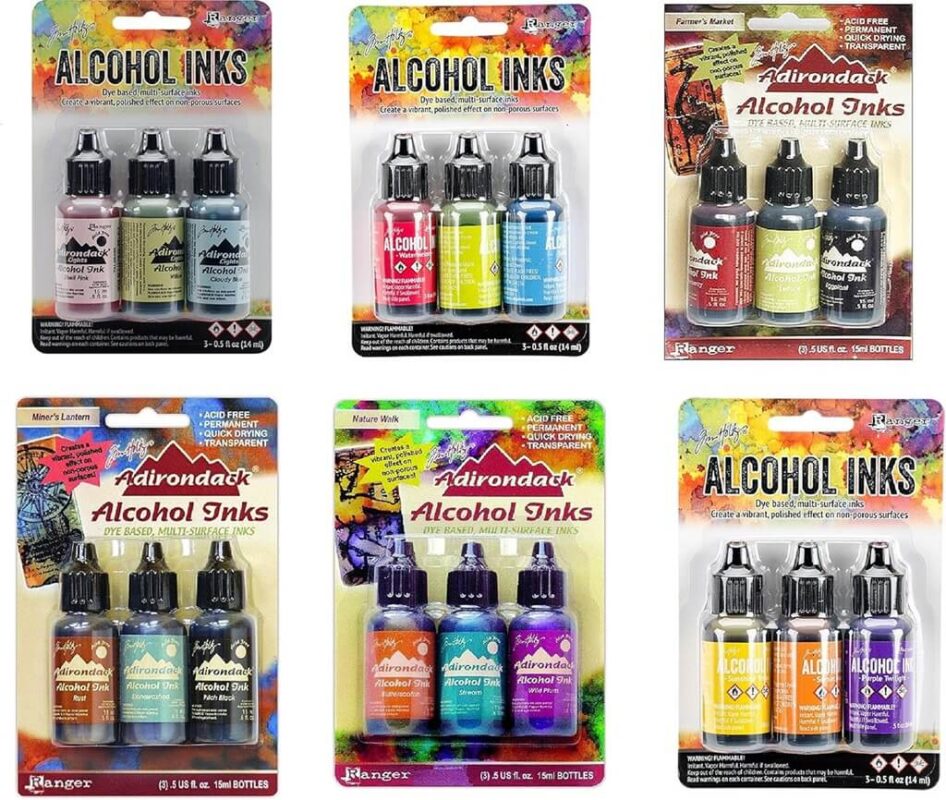
Tim Holtz has been the face of Ranger’s alcohol ink line for years, and it remains one of the most recognized names, regarding the best alcohol ink for epoxy resin. The colors are dye-based, transparent, and formulated to move fluidly across non-porous surfaces, which is exactly the quality that makes them useful in resin.
About the brand
Ranger Ink built its reputation in the scrapbooking and mixed-media space long before resin art became popular, and the Adirondack line carries that legacy. Tim Holtz personally curates the color palettes, which is why the sets are often grouped into coordinated three-color trios rather than sold as one large rainbow assortment.
Reputation among resin artists
Ranger has one of the widest color libraries on the market, and resin artists frequently reach for it specifically for geode and layered pour work, where access to precise, coordinated shades matters more than raw pigment concentration alone. It is also one of the few brands with a full family of metallic mixatives designed to be layered on top of standard colors rather than used alone.
What makes it stand out, the pros and cons
- Exceptionally wide color range, including seasonal and themed collections
- Metallic mixatives are designed to intensify existing colors rather than compete with them, useful for adding shimmer to a geode pour without overpowering the base palette
- Fine-point bottle tips that make detail work and precise drop placement easier than wider-mouthed bottles
Pros
- Colors are consistent bottle to bottle, which matters for repeat commercial work
- Coordinated color sets take the guesswork out of building a palette
- Long-standing brand history means troubleshooting tips and community tutorials are easy to find
Cons
- Among the pricier options per ounce, especially for niche or discontinued colors
- Bottles are on the smaller side, around 0.5 oz, so heavy resin users go through them quickly
- No dedicated sinking white in the standard line. The Snow Cap mixative behaves differently than Piñata’s Blanco Blanco and takes practice to use for sinking effects
This alcohol ink is best for
Geode art and layered resin pieces where color precision and a coordinated palette matter more than working with a single all-purpose white.
How the experience with this alcohol ink goes with resin projects
The ink flows well and blends cleanly, and the smaller bottle tips give more control than some squeeze-bottle budget brands. The tradeoff is cost. Because the bottles are small, projects that need heavy saturation, like large resin trays or bold ocean pours, burn through ink faster than the price per bottle might suggest.
Our recommended product lines
- Tim Holtz Adirondack Alcohol Ink 3-color coordinated sets, sold on Amazon and through Ranger’s official site
- Metallic Mixative sets, available on Etsy resin-supply shops and Amazon
- Individual 0.5 oz bottles for replacing specific shades, available through Ranger Ink’s website and major craft retailers
3. Let’s Resin Alcohol Ink (Best for Beginners)
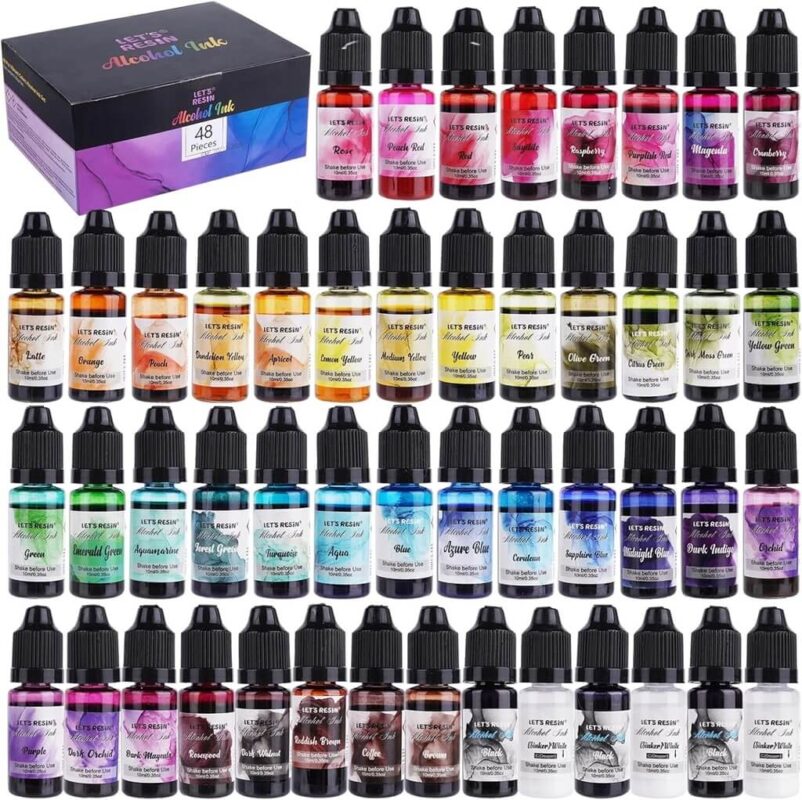
Let’s Resin built its ink line specifically with resin crafters in mind, rather than adapting a product originally designed for paper or fabric. That resin-first approach shows in the packaging and the instructions included with most sets, which is why it is consistently recommended as one of the best alcohol inks for resin beginners specifically.
About the brand
Let’s Resin is a resin-supply company first, meaning its alcohol ink exists as part of a broader ecosystem that includes molds, pigments, and finishing tools. Sets typically come with a dedicated sinking white and a blending solution included, something not every brand bundles by default.
Reputation among resin artists
This is consistently the brand recommended to people making their first petri dish coaster or resin swirl piece. The larger 48 and 64 color sets are popular specifically because they include enough sinking white to get through several projects, which beginners often underestimate when buying ink separately.
What makes it stand out, the pros and cons
- Sets are built around resin techniques from the start, with instructions for petri, marbling, and layered pours included
- Bundled blending solution removes an extra purchase most beginners don’t know they need until mid-project
- Larger bottle counts per set mean a wider color range for a lower entry cost than premium studio brands
Pros
- Genuinely beginner-friendly packaging and guidance
- Good value for the number of colors and included accessories
- Widely available with responsive customer support if a set arrives with a leaking bottle
Cons
- Pigment strength is solid but noticeably less concentrated than Piñata or Ranger, so colors can look slightly softer once cured
- Smaller bottle sizes, around 0.35 oz, mean frequent restocking for larger projects
- Not the first choice for artists chasing highly saturated, gallery-quality color depth
This alcohol ink is best for
Coasters and other small, beginner-scale resin projects where ease of use and included accessories matter more than maximum pigment intensity.
How the experience with this alcohol ink goes with resin projects
The ink pours cleanly from soft squeeze bottles, and the sinking white behaves predictably once you get a feel for the ratio. Reviewers and community feedback consistently note that colors do not spread as aggressively as some competitors, which is helpful for beginners since it gives more control over where color lands.
Our recommended product lines
- Let’s Resin 48-Color Concentrated Alcohol Ink Set, available on the Let’s Resin website, Amazon, and Walmart
- Let’s Resin 14-Color starter set with included gold metallic and blending solution
- Let’s Resin Metallic Alcohol Ink Set for adding shimmer accents to beginner projects
4. Copic Ink, Formerly Various Ink (Best Professional Color Selection)
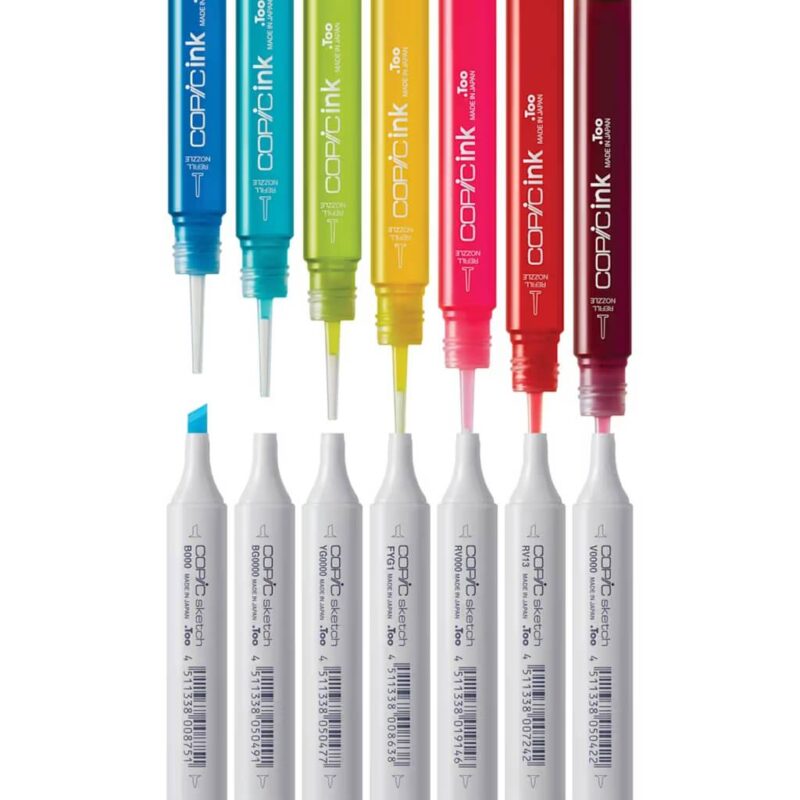
Copic’s alcohol-based marker refill ink, long known as Various Ink, offers the largest color range of any brand on this list at 358 shades. It was never designed for resin, but its precision and color depth have made it a favorite among detail-focused resin artists anyway.
A quick note: Copic rebranded its refill ink from “Various Ink” to “Copic Ink” in 2019 and moved from 25 ml to smaller 12 ml bottles at the same time. Both names refer to the same product, and older tutorials and packaging may still use the original name, so do not be confused if you see both terms used interchangeably when researching the best alcohol ink for resin jewelry work.
About the brand
Copic built its name on professional illustration markers used by comic artists, architects, and designers. The ink itself was developed to refill those markers, which means the formula prioritizes color accuracy and consistency above nearly everything else.
Reputation among resin artists
Copic is less common in mainstream resin tutorials than Piñata or Ranger, largely because of its price and smaller bottle size, but it shows up frequently in jewelry and detail work where a resin artist needs one very specific shade rather than a broad palette. Illustrators who move into resin jewelry often bring their existing Copic collection with them.
What makes it stand out, the pros and cons
- Unmatched color precision across 358 numbered shades, useful for matching a very specific reference color
- Stable color consistency batch to batch, with Copic stating a three-year shelf life for its ink
- Doubles as marker refill ink, so the investment serves two hobbies at once for artists who also draw
Pros
- No other brand comes close on color range
- Reliable, professional-grade color accuracy
- Long manufacturer-stated shelf life
Cons
- Most expensive option on this list per ounce
- Smaller 12 ml bottles mean it is not economical for large pours like lamps or trays
- No dedicated sinking white or resin-specific instructions, since the product isn’t marketed for resin at all
This alcohol ink is best for
Small-scale, detail-oriented resin jewelry where color accuracy matters more than volume.
How the experience with this alcohol ink goes with resin projects
The ink itself behaves like other alcohol inks once it hits resin, but the bottle design, built for refilling markers rather than dropping into a mold, takes some adjustment. Several long-time users mention needing an empty dropper bottle for more controlled application, since the newer 12 ml bottles are stiffer to squeeze than a typical resin-ink bottle.
Our recommended product lines
- Copic Ink individual 12 ml bottles, sold through Copic’s official retailers, Amazon, and specialty art stores like Jerry’s Artarama
- Copic Colorless Blender solution, useful for diluting colors before adding to resin
5. Limino Alcohol Ink (Best Value)
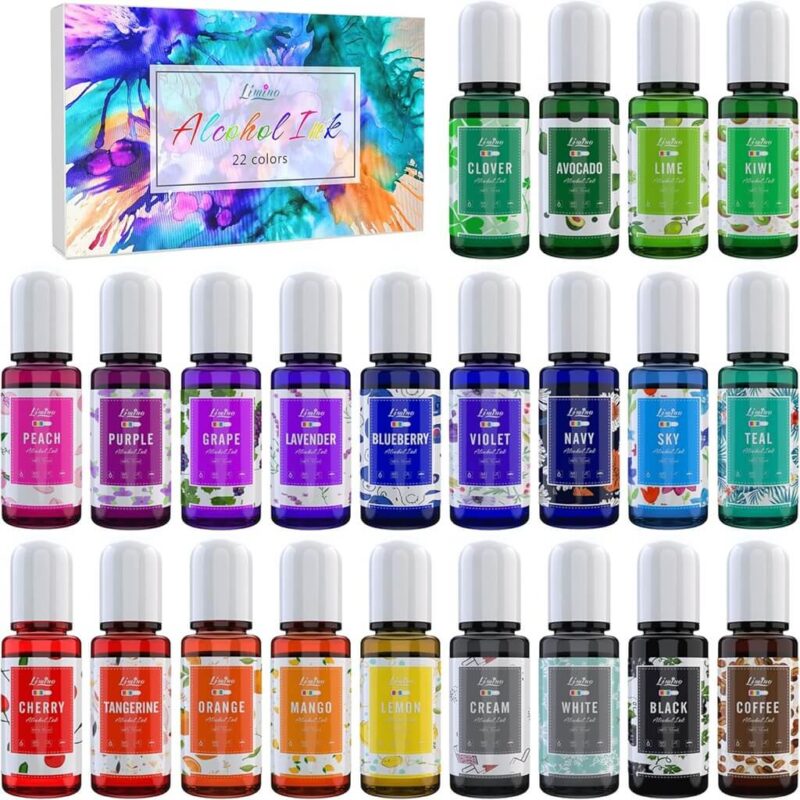
Limino sits in the sweet spot between budget sets and premium studio alcohol ink for resin. The pigmentation is noticeably stronger than most inks in its price range, and the sets are built with resin techniques specifically in mind, making it one of the best alcohol inks for resin projects on a tighter budget.
About the brand
Limino is a resin-and-craft supply company based in Guangzhou, China, selling primarily through Amazon and its own site. Alongside alcohol ink, it sells UV resin and epoxy resin supplies, which keeps its ink formulated with resin compatibility as a priority rather than an afterthought.
Reputation among resin artists
Limino has built a following among resin crafters looking for strong pigmentation without paying premium prices. A distinctive feature of its sets is offering two different white inks: one labeled to push color toward the middle of a pour, and one labeled to push it toward the bottom, giving more control over sinking depth than a single all-purpose white allows.
What makes it stand out, the pros and cons
- Two-white system for controlling exactly how deep colors sink in a mold
- High concentration means colors hold their intensity even after dilution
- Larger sets, 22 to 24 colors, at a price point closer to budget brands than premium ones
Pros
- Strong pigment-to-price ratio
- Useful sinking control through the dual white system
- Consistent squeeze-bottle design that is easy for beginners to manage
Cons
- Fewer third-party reviews and community tutorials compared to legacy brands like Piñata or Ranger
- Not recommended by the manufacturer for UV resin, only standard epoxy
- Smaller bottle sizes mean the value advantage shrinks on very large projects
This alcohol ink is best for
Large resin trays and multi-layer pours where you need reliable coverage and sinking control without paying premium prices.
How the experience with this alcohol ink goes with resin projects
The high concentration means a little ink goes further than expected, and diluting with isopropyl alcohol gives good control over lighter tones. The two-white system takes a project or two to get used to, but once understood, it gives more predictable depth control than single-white brands.
Our recommended product lines
- Limino 22-Color Alcohol Ink Set, available on Amazon
- Limino 12-Color starter set for smaller projects
- Limino 24-Color Set with 6 dedicated white bottles, useful for petri and layered work
6. DecorRom Alcohol Ink (Best Budget Pick)
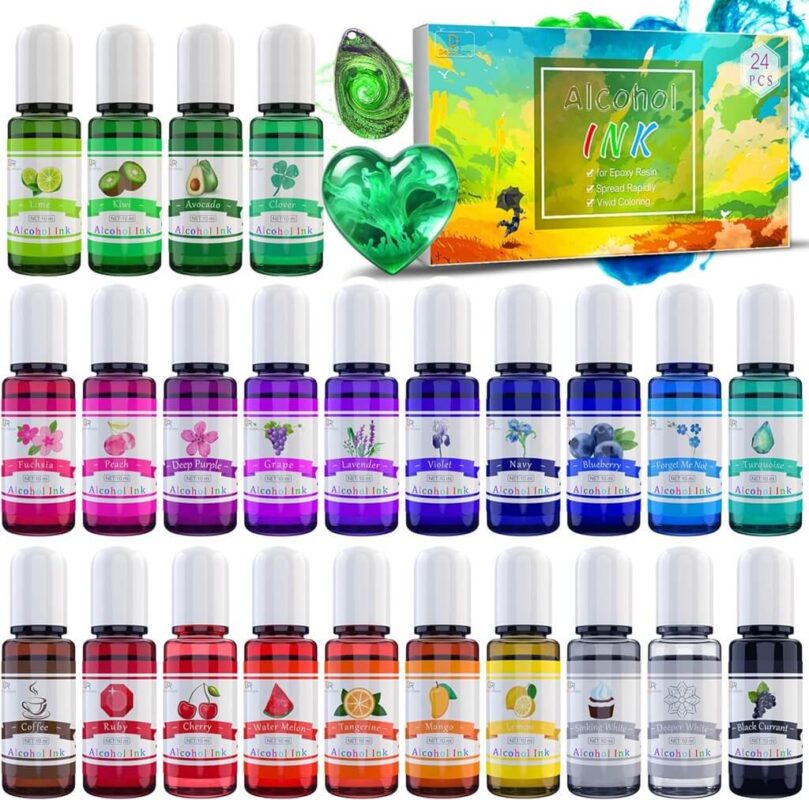
DecorRom offers some of the largest color counts per dollar of any brand on this list, making it a common first purchase for hobbyists testing resin art before investing in pricier ink.
About the brand
DecorRom is a China-based craft supply brand selling primarily through its own online store and Amazon, focused on entry-level resin and craft materials rather than professional art supplies.
Reputation among resin artists
DecorRom is popular for its color count and low price, but community feedback is mixed on its included white ink. Some resin crafters report that the white does not sink and separate colors as effectively as Piñata’s Blanco Blanco, and a common workaround is buying DecorRom for its colored inks and pairing it with a stronger sinking white from another brand.
What makes it stand out, the pros and cons
- More colors per set than almost any competitor at this price point
- Squeeze-bottle design gives reasonable drop control for the price
- Frequently bundled sets, 12, 18, and 24 color options, let you scale up as your projects grow
Pros
- Very low cost per color
- Good starting point for testing techniques before investing in pricier ink
- Wide availability through major retailers
Cons
- Weaker sinking performance from the included white ink, based on user reports
- Some users report inconsistent bottle seals leading to leaks in shipping
- Pigmentation is noticeably lighter than premium brands, especially in pastel and light shades
This alcohol ink is best for
Hobbyists experimenting with resin art for the first time who want to try a wide color range before committing to a pricier brand.
How the experience with this alcohol ink goes with resin projects
The ink performs well for basic layering and color mixing, but if a project depends on a strong petrified or sinking effect. We would recommend pairing DecorRom’s colored inks with a dedicated sinking white from Piñata or Limino rather than relying on DecorRom’s own white.
Our recommended product lines
- DecorRom 24-Color Alcohol Ink Set, sold on Amazon and DecorRom’s own site
- DecorRom 18-Color Set with 6 white bottles included
- DecorRom White & Black Alcohol Ink Set, useful as a supplement once you’ve identified which white performs best for your technique
7. SigWong Alcohol Ink (Best Large Starter Set)
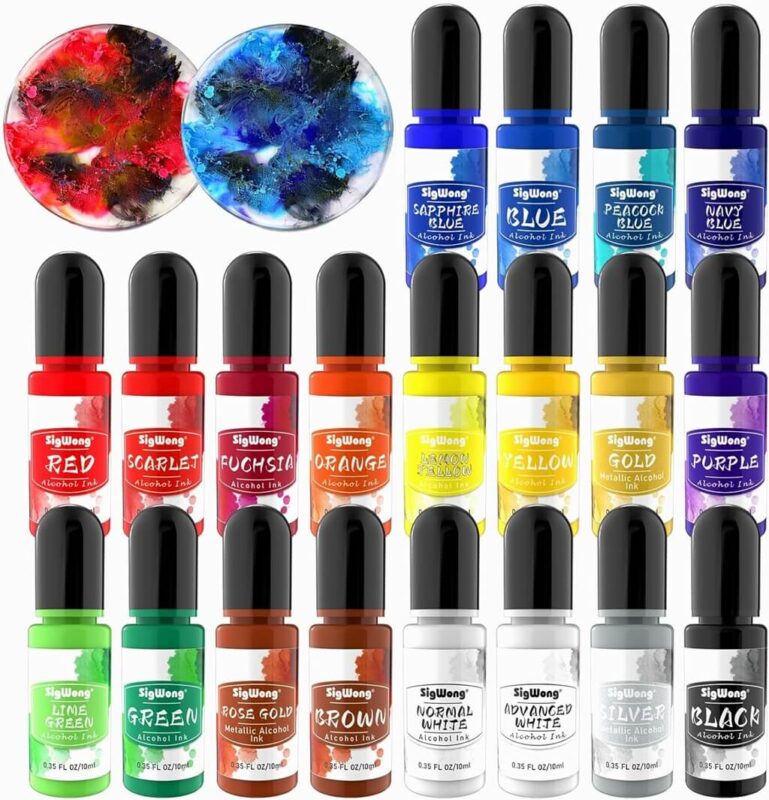
SigWong is one of the most affordable alcohol ink brands available, and it earns its spot on this list specifically for beginners who want to experiment across a large number of colors without a big upfront investment.
About the brand
SigWong is an Amazon-native craft brand with no dedicated retail presence outside marketplace storefronts, similar to several other budget resin-ink brands. The appeal is almost entirely about accessibility and price rather than premium formulation.
Reputation among resin artists
Resin crafters consistently describe SigWong the same way: affordable, easy to find, and noticeably less pigmented than pricier brands, but with one standout quality, a true, accurate red that is genuinely hard to find elsewhere. For casual projects and practice pieces, that tradeoff is often worth it.
What makes it stand out, the pros and cons
- Very low price per bottle, making large sets accessible for experimentation
- A well-regarded, true-to-color red shade
- Sealed bottles that reduce spillage during shipping and storage
Pros
- Extremely budget-friendly for the number of colors included
- Good entry point for casual crafters or people making gifts rather than pieces to sell
- Smaller bottle sizes suit occasional use without ink drying out in storage
Cons
- Noticeably lower pigmentation than premium brands, resulting in more muted color once cured
- Not recommended for professional or resale-quality work where color intensity matters
- Limited color-matching consistency compared to established brands like Copic or Piñata
This alcohol ink is best for
Practice projects, casual gifts, and beginners who want to explore a wide color range before deciding which premium brand to invest in.
How the experience with this alcohol ink goes with resin projects
The ink handles predictably and the sealed bottles are genuinely convenient, but the color payoff is softer than expected if you are used to more concentrated brands. It works best as a learning tool rather than a final-product ink for pieces you plan to sell.
Our recommended product lines
- SigWong 24-Color Alcohol Ink Set, sold on Amazon
- SigWong Metallic Alcohol Ink Set, 24 colors, for shimmer accents
Which Alcohol Ink Brand Is Best for Different Resin Projects?
Instead of ranking one winner, this comparison of the best alcohol ink for epoxy resin will help to match the ink to what you are actually making. Check if any of the followings match your current or upcoming projects:
| Resin Project | Recommended Brand | Why |
| Resin lamps | Piñata | Rich, vibrant colors with excellent transparency for light to pass through |
| Petri art | Piñata + Ranger | Piñata’s Blanco Blanco provides strong sinking effects; Ranger fills out the coordinated color palette |
| Geode art | Ranger | Wide color library and metallic mixatives suited to layering |
| Coasters | Let’s Resin | Easy blending, bundled accessories, and beginner-friendly instructions |
| Jewelry | Copic | Extensive, precise color selection for detailed, small-scale work |
| Ocean art | Piñata | Vibrant blues and smooth, transparent color transitions |
| Large resin trays | Limino | Strong pigmentation and dual-white sinking control at a reasonable cost |
| Selling resin crafts | Piñata or Ranger | Consistent, professional-grade quality across repeat projects |
If you are currently brainstorming your next creation, exploring some unique epoxy resin lamp ideas can help you visualize how these different colors and effects look when fully illuminated.
How to Choose the Best Alcohol Ink for Resin (And See If They Actually Fit Your Projects)?
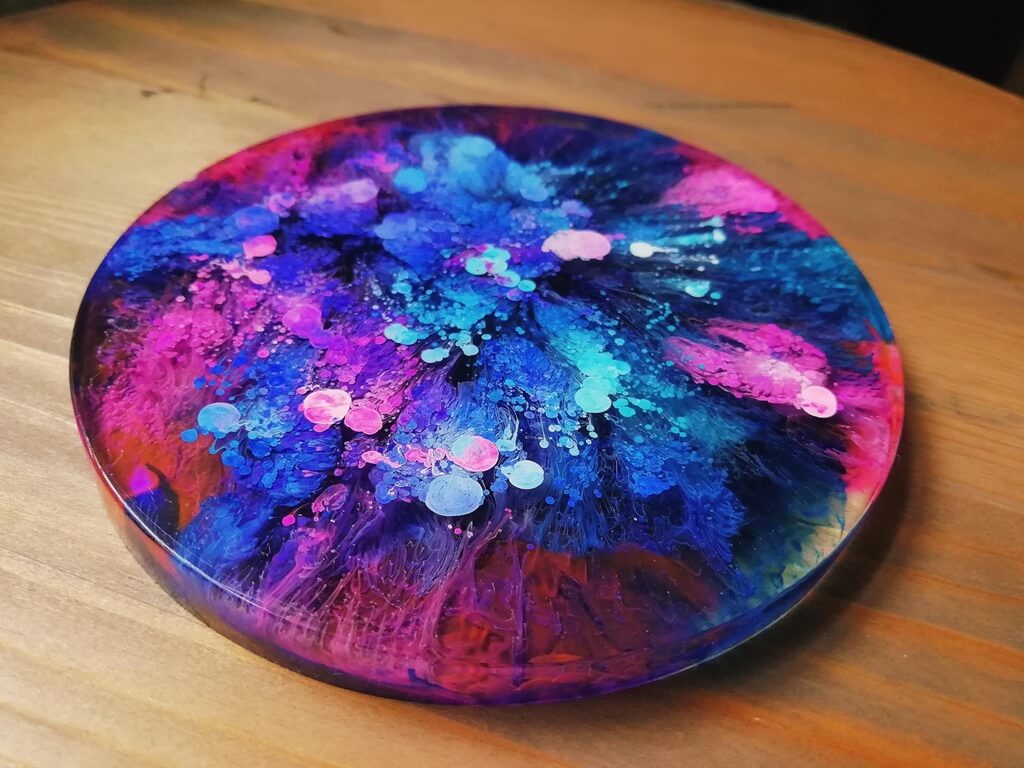
Pigment Strength: Why Concentrated Inks Create Richer Resin Effects
The amount of dye or pigment packed into each drop determines how vibrant your finished piece looks once it is sealed under resin. Diluted or low-pigment inks can look washed out after curing, since resin itself slightly softens color intensity compared to how the ink looks on paper.
Brands like Piñata and Copic pack more color per drop, which matters most for pieces where you want bold, saturated results, like ocean art or statement jewelry.
Color Selection: Starter Kits vs Individual Bottles
Large starter kits are appealing because they feel like more value for the money, but most resin artists end up using a fairly small core palette repeatedly.
If you already know your go-to colors, buying individual bottles from a brand like Piñata or Ranger is often more cost-effective long-term than a 48-color kit where half the bottles sit unused.
Otherwise, starter kits make more sense if you are still figuring out your style or plan to create a wide variety of pieces.
Bottle Design: Why Dropper Control Affects Precision and Reduces Waste
Fine-point dropper tips, like the ones on Ranger and Piñata bottles, let you place small, controlled amounts of ink exactly where you want them. Wider squeeze-bottle nozzles, common on budget brands, are harder to control and tend to release more ink than intended, which increases waste and can make it harder to build up color gradually.
Compatibility with Resin Techniques: Petri Art, Geodes, Ocean Art, Resin Lamps, Jewelry, and Abstract Pours
Not every ink behaves the same way once it hits resin. Petri and geode techniques depend heavily on having a reliable sinking white, since without one, colors tend to float near the surface instead of settling into layered rings.
Here is what we observe through our products: Resin lamps and ocean art benefit from highly transparent, dye-based inks that let light pass through. Jewelry and detail work reward precise color matching over raw volume.
Matching the ink’s specific strengths to your preferred alcohol ink resin techniques will save far more frustration than chasing a single “best” brand overall.
Price vs Value: When Premium Inks Are Worth the Extra Cost
Premium ink makes the most sense when you are selling finished pieces, since color consistency and vibrancy directly affect how professional the final product looks and how it photographs.
For personal projects, gifts, or practice pieces, a mid-range or budget brand is often perfectly adequate, and the money saved can go toward better resin or molds instead.
Availability: Replacement Bottles, Refill Options, and Consistent Stock for Repeat Projects
If you plan to make the same style of piece repeatedly, whether for a shop or a series of gifts, check whether a brand sells individual replacement bottles rather than only full sets. Established brands like Piñata, Ranger, and Copic sell single bottles, which matters once you find your signature colors and do not want to keep repurchasing an entire kit just to replace one shade.
What are the Common Mistakes When Buying Alcohol Ink for Resin?
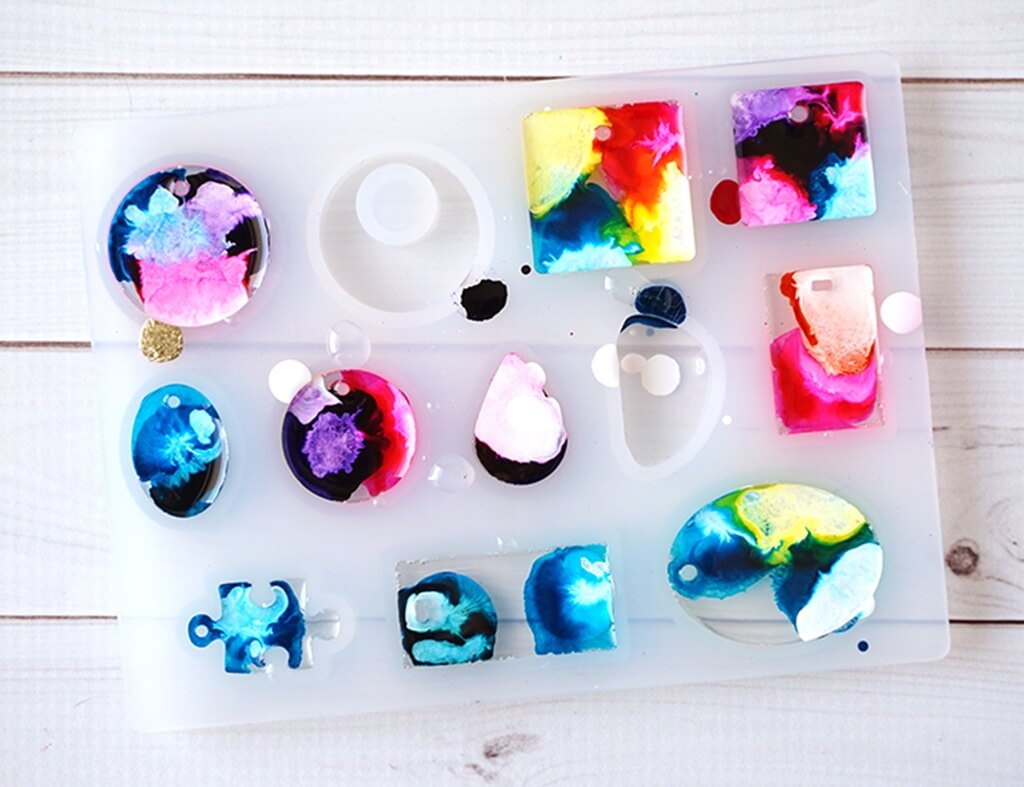
- Buying the largest color set without considering quality. A 64-color budget set sounds appealing, but if the pigmentation is weak, you will end up needing more drops per color to get the same effect, which defeats the value.
- Assuming every alcohol ink performs the same in resin. Formulation differences affect sinking behavior, transparency, and how colors interact with each other once mixed.
- Ignoring bottle size and cost per ounce. A cheaper-looking set with smaller bottles can end up costing more per project than a pricier brand with larger bottles.
- Choosing low-pigment inks for professional projects. If you are selling your work, muted or inconsistent color can undercut how finished pieces photograph and sell.
- Forgetting to buy white ink for petri techniques. Standard colored inks usually float in resin. Without a reliable sinking white like Blanco Blanco, the layered, petrified effect many petri and geode pieces rely on simply will not happen.
Best Alcohol Ink for Epoxy Resin: Frequently Asked Questions
What is the best alcohol ink for epoxy resin overall?
Jacquard Piñata is generally considered the best all-around alcohol ink for epoxy resin because of its strong pigmentation, transparent dye-based colors, and its pigment-based Blanco Blanco white, which sinks and creates layered effects that most other whites cannot replicate.
Can you use any alcohol ink in epoxy resin?
Most true alcohol-based inks work in epoxy resin, but water-based inks and dyes marketed for other crafts, like fabric dye or food coloring, generally do not mix well and can interfere with curing. Stick to inks specifically labeled alcohol-based or resin-compatible.
Which alcohol ink brand lasts the longest?
In terms of shelf life before use, Copic states a three-year shelf life on its ink, and most dye-based alcohol inks last for years if kept sealed and out of direct sunlight. In terms of colorfastness after curing, all alcohol inks fade somewhat over time under UV exposure, though pigment-based colors and metallics tend to hold up better than dye-based ones.
Does expensive alcohol ink make a noticeable difference?
Generally yes, particularly in pigment concentration and color consistency between bottles. Premium brands like Piñata and Copic produce more saturated, predictable results, which matters most for pieces meant to be sold or photographed professionally. For casual or practice work, the difference is much less noticeable.
What colors work best for resin art?
This depends on the project. Blues and greens are the go-to for ocean art, warm ambers and golds suit resin lamps, and jewel tones like magenta and cobalt are popular for geode-style pieces. Metallics work well as accents in nearly any technique but can overpower a piece if overused.
Is alcohol ink permanent after resin cures?
Once sealed under cured epoxy resin, alcohol ink color is generally stable and will not smear or run, since the resin acts as a protective barrier. Some fading can still occur over years of UV exposure, especially in pieces displayed near direct sunlight.
Can you mix different alcohol ink brands together?
Yes, most alcohol inks are chemically similar enough to mix without issue, since they all use an alcohol base. Many resin artists intentionally combine brands, for example using Piñata’s Blanco Blanco as a sinking white alongside a different brand’s colored inks.
Do alcohol inks fade over time in resin?
Some fading is normal over years, particularly with dye-based colors and under regular UV exposure. Using a UV-resistant topcoat resin and keeping finished pieces out of direct sunlight slows this considerably. Pigment-based colors and metallics, like Piñata’s Blanco Blanco and Rich Gold, tend to resist fading better than standard dye-based shades.
