
Hey, let us tell you something: The best epoxy resin for wood should not be ranked by brand but by project. But we know that’s not always the case. It is exactly why someone would end up pouring tabletop resin into a two-inch river table gap, or using deep pour resin to coat a coaster, and getting cracking, overheating, or a soft, tacky finish six months later.
From our perspective who work with epoxy resin every day, you may find the best epoxy resin for woodworking withing these following brands:
- ArtResin and Dr. Crafty for beginner DIY projects
- RiverCast and Let’s Resin Deep Pour for more advanced resin projects
- Takimo and Craft Resin outdoor lines for outdoor projects
Let’s get to the details now!
What Are the Types of Epoxy Resin for Wood? (Quick Overview)
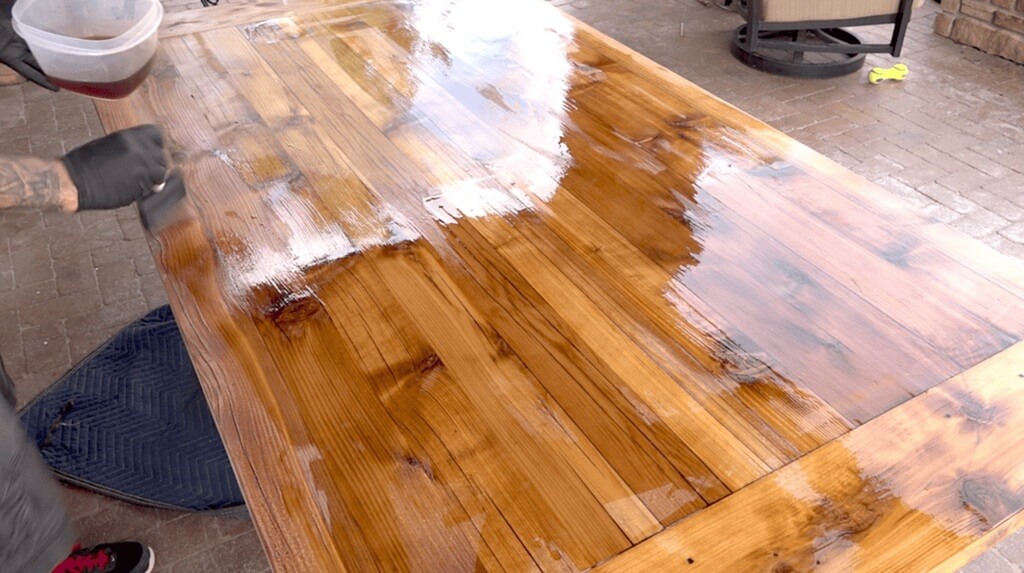
Before comparing brands, it helps to know which category you’re shopping in. Epoxy resin for wood splits into three broad types, and mixing them up is the single most common reason projects fail.
- Coating and tabletop resin is formulated for thin layers, usually no more than 1/8 to 1/4 inch per pour. It cures fast, self-levels well, and gives that glass-like gloss you see on charcuterie boards, bar tops, and coasters. Pour it too thick and it overheats, yellows, or cracks as it cures.
- Deep pour and casting resin is built for the opposite problem: filling large voids, typically 1.5 to 4 inches in a single pour, like the gap in a river table or a deep knot in a slab. It’s formulated with a slower, low-heat cure so the mass doesn’t overheat as it hardens. Used for a thin coating, it can stay soft or tacky because it’s simply not designed to cure that fast at that thickness.
- Wood filler and adhesive epoxy isn’t a finish at all. It’s a structural product for repairing cracks, bonding joints, or waterproofing end grain before a finish goes on top. It’s usually thicker, sometimes amber rather than crystal clear, and prioritizes strength and water resistance over optical clarity.
Matching your project to the right category before you compare brands within it will save more headaches than any single product choice. Now let’s head to the best epoxy resin for woodworking!
What Are the Best Epoxy Resin for Beginner-Friendly Indoor Projects?
For coasters, jewelry, and small decor pieces, thin-layer coating resin is what you want, and beginner-friendliness matters more here than raw performance specs.
ArtResin

ArtResin is the one we point beginners to most often when food safety or a gift item is involved. The brand keeps a single core formula rather than splitting into different types of resin, so the choice mostly comes down to volume:
- The 8oz Mini Kit: Suits a first test pour or a small batch of jewelry blanks.
- The 32oz Kit: Covers a full set of coasters or a small tray without running short mid-pour.
Either size mixes 1:1 by volume, gives about 45 minutes of working time at room temperature, and is dry to the touch in 24 hours with a full cure at 72 hours.
In our own pours, it’s noticeably forgiving of small measuring errors compared to cheaper brands, and the self-leveling is strong enough that most flat pieces need little to no torch work to come out glass-smooth.
What sets ArtResin apart is that it’s been independently tested against 13 food safety and migration standards and passed all of them when used undiluted. So a cured charcuterie board or serving tray is genuinely food-safe, not just marketed that way. It also carries built-in anti-yellowing protection, which matters if the piece will sit anywhere near a window.
Craft Resin
Craft Resin is our next recommendation for the best epoxy resin for wood. For this brand, we reach for when a project needs a slightly thicker, glossier build without stepping up to deep pour. It’s a 1:1 mix, self-leveling, and reaches a hard cure in about 36 hours. For Craft Resin, we would recommend:
- Deep Pour: For small projects later grows into something like a slab table or a deep void repair. This line uses the same low-odor formulation in a 2:1 mix built for thicker single pours, so it’s worth knowing before buying a second brand
We’ve noticed it runs a touch thicker straight out of the bottle than ArtResin, which actually helps on vertical edges where a thinner resin tends to drip. Like most coating resins, it’s rated for pours up to about 1/8 inch for the best clarity, so it’s better suited to flat coats and flood coats than filling deep gouges.
Dr. Crafty
Dr. Crafty is another budget entry point regarding the best epoxy resin for wood, and it earns that spot honestly rather than by cutting corners that matter. For this brand, we recommned:
- Clear Epoxy Resin Kit: A straightforward 1:1 mix with roughly 45 minutes of working time, UV resistant, and low in VOCs, which makes it a sensible first kit for someone testing whether resin work is for them before investing in a premium brand. (If you want to know more about VOCs and safety, check our guide on does epoxy resin smell).
- Deep Pour Epoxy Resin Kit: Rated for pours up to 4 inches, so the same budget-friendly brand can follow a maker from a first coaster set into a first river table. It won’t outperform ArtResin or Craft Resin on fine details like bubble release, but for coasters and small decor it does the job.
Note: The tradeoff when buying from Dr. Crafty is that firsthand is a slightly warmer, less water-white tint compared to ArtResin. We do think it is worth knowing if a project depends on true crystal clarity
What Are the Best Epoxy Resin for Advanced Indoor Wooden Projects?
River tables, thick tabletops, and deep pours need a resin engineered to cure slowly enough that it doesn’t overheat, crack, or cloud as the mass hardens. This is where mix ratio and pour depth become the two numbers that matter most.
System Three
System Three is what we recommend when clarity is non-negotiable, which is most of the time on a river table where the whole point is seeing through it. Within this brand of epoxy resin for wood, we recommend that you check:
- RiverCast: For this type of epoxy resin for wood, consider a 2:1 mix, fills voids up to 1.5 inches in a single pour, and de-aerates quickly enough that most projects come out with minimal trapped bubbles without extensive torch work. Working time runs about three hours at 70°F, which gives enough room to level a slab and set embeds before it starts to firm up, though we’d still recommend keeping the workspace warm since the pour slows noticeably below that temperature.
- MirrorCast: For smaller voids like knots and checks rather than a full river, this one is the companion product in the same lineup, formulated with a faster-reacting hardener that’s better suited to filling cracks than to a full 1.5-inch river pour.
Let’s Resin
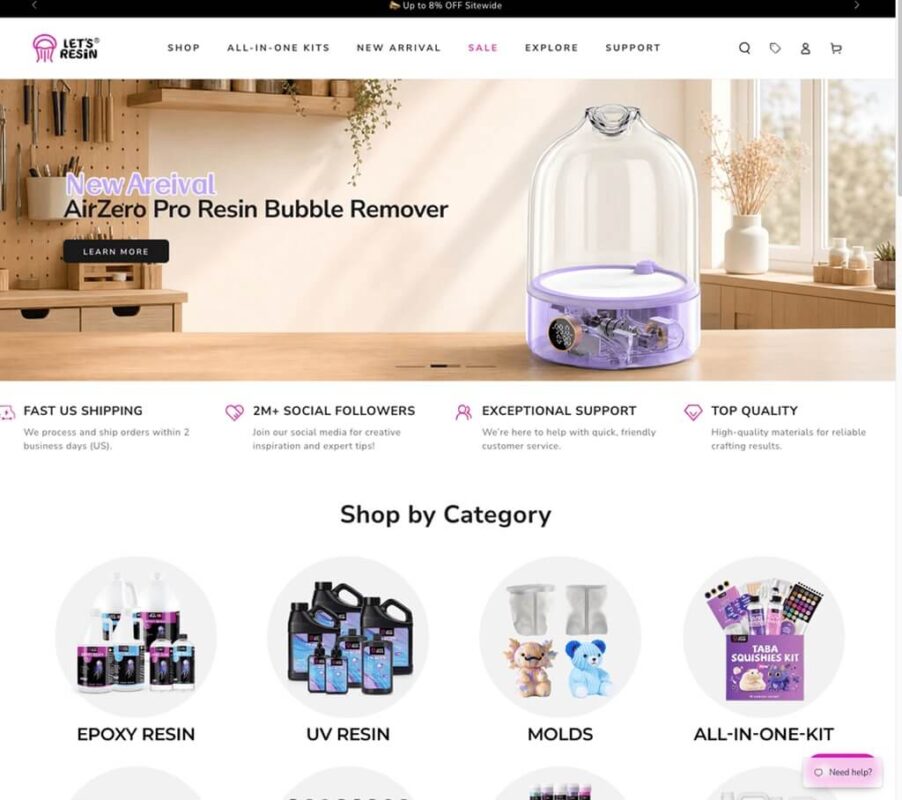
Let’s Resin is the next suggestion on our list of the best epoxy resin for wood, especially the advanced projects. Just like the previous brands, for Let’s Resin, you may consider trying these product lines:
- Let’s Resin Deep Pour: Goes deeper in a single shot, rated for 2 to 4 inches without stacking layers, which is useful on thicker slabs where you’d otherwise need two or three step pours with System Three. It’s formulated for a thin, easy-flowing viscosity so it settles into detailed voids and around embedded objects without trapping air, and it carries UV resistance to help the cast stay clear rather than ambering over time.
- Table Top Epoxy Resin: Considered the companion product for finishing the surface once the deep pour has cured. It gives a harder, more scratch-resistant final coat than deep pour resin is designed to provide on its own.
Promise Epoxy
Promise Epoxy (the current name for what was ProMarine Supplies) rounds out this tier as a workhorse option built for a 2-inch single pour on bar tops, countertops, and river tables. For this brand, take these two:
- Promise Deep Pour Epoxy Resin is self-leveling and gives a long enough working time to embed objects and clear bubbles before it firms up. The brand’s
- Promise Table Top Epoxy: It is the matching finish coat for the same projects, useful for a final glossy layer over a cured deep pour, though it’s worth noting the manufacturer specifies it for indoor use rather than direct outdoor exposure.
What Are the Best Outdoor Epoxy Resin for Wood?
Outdoor projects change the calculus entirely. UV exposure and moisture cycling will find any weakness a resin has, so the priorities shift from clarity and pour depth to UV stability and water resistance. Now, let’s discover the best outdoor epoxy resin for wood in detail!
JANCHUN
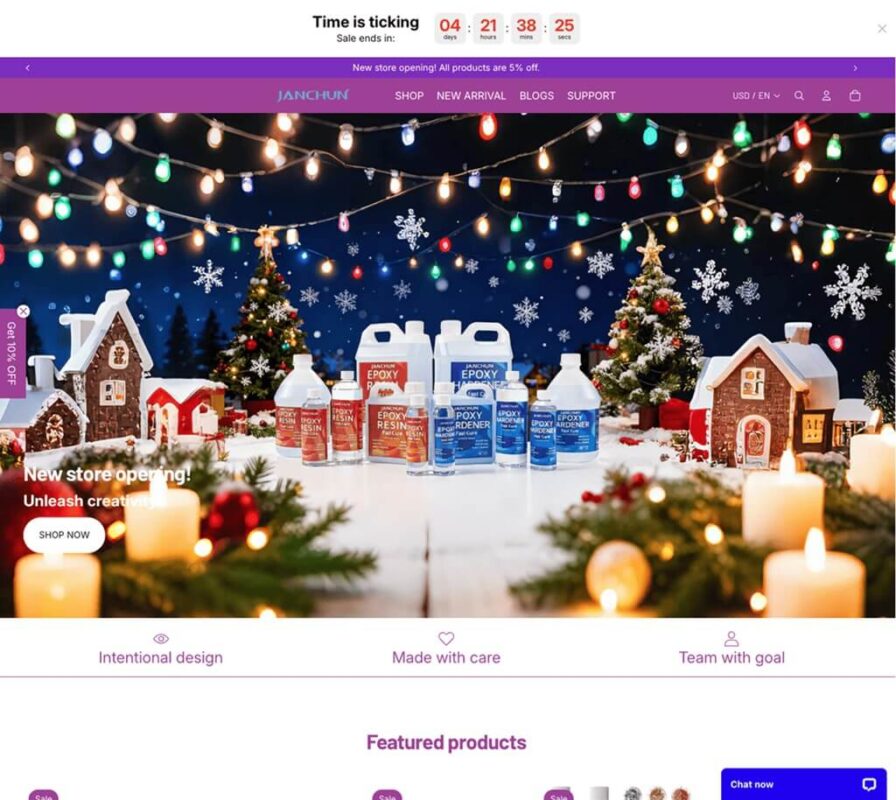
JANCHUN’s most popular product line is the Crystal Clear Epoxy Resin. It is a straightforward, well-priced option for outdoor-facing coating work. Most product lines refer to a 1:1 mix with about 45 minutes of working time, demolds in as little as 8 hours, and reaches a full cure at 24 hours, which is faster than most of the other coating resins on this list.
The brand markets it as resistant to yellowing for up to 5 years, a claim worth treating the same way as any manufacturer’s UV rating: a strong sign the formula includes real UV inhibitors, not a guarantee against every climate and sun exposure level. For outdoor projects, you may consider using:
- JANCHUN 1 Gallon Kit: It goes to bigger pieces like an outdoor side table or a full bar top. This line scales the standard formula up without switching brands mid-project.
TAKIMO
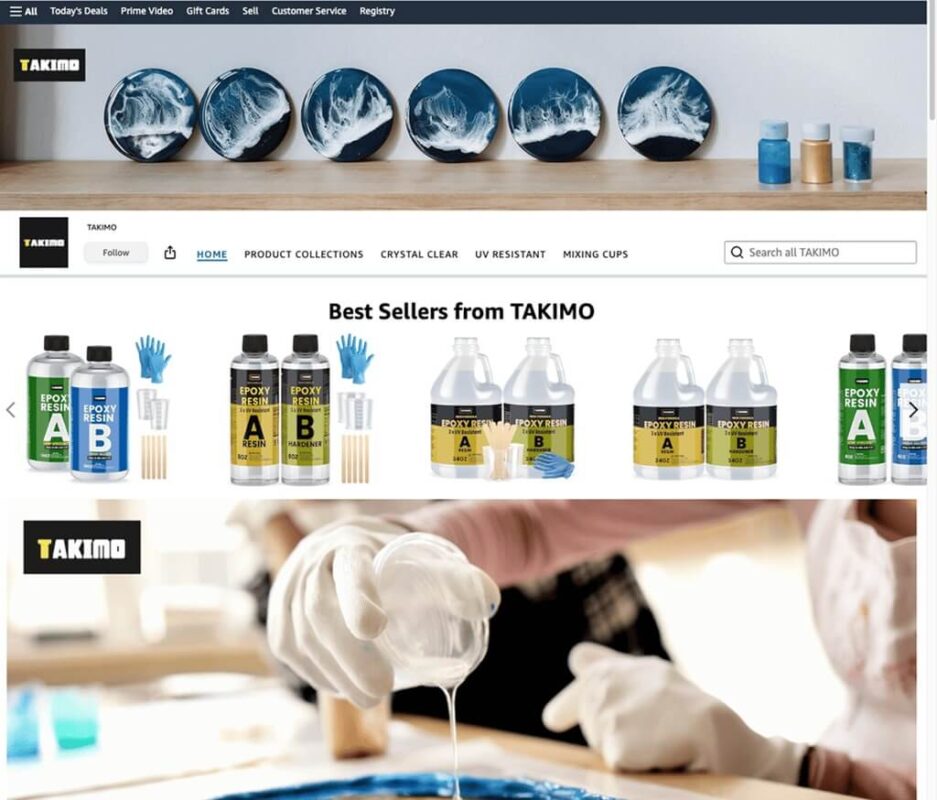
TAKIMO makes a valuable purchase for anyone who looks for the best resin for wood, especially the outdoor projects. Yet, we have to note that even though this is a nice brand for outdoor woodwork, it is best used in garden furniture, planters, and outdoor decor that does not stay in constant full sun. Here are some product lines to consider:
- 3× UV Resistant Epoxy Resin Kit is the affordable pick for outdoor-facing coatings. It’s a 1:1 mix with roughly 40 minutes of working time, cures in 8 to 24 hours, and carries what the brand markets as triple UV resistance to slow yellowing under direct sun.
- Crystal Clear Epoxy Resin Kit is UV-stabilized as well but without the enhanced 3× formula, so it’s a reasonable choice for pieces that get filtered or partial sun rather than constant direct exposure.
Craft Resin (outdoor lines)
Craft Resin’s Table Top Epoxy, in its UV-resistant formulation, is the one to reach for when an outdoor-adjacent piece, like a covered patio table or shaded bar top, still needs the same clarity and self-leveling ease as an indoor project.
Moreover, it’s worth being clear that this isn’t a separate marine or exterior-rated product line, so for anything in full, unbroken sun exposure, we’d pair it with a maintenance topcoat rather than expect it to perform like a dedicated outdoor epoxy indefinitely.
It is a distinction we’ve learned to explain to customers directly: UV-resistant and marine-grade are not the same claim, and mixing them up is how an otherwise good project disappoints someone a year in. To learn more about how cured resin behaves in outdoor elements, see our full guide on is resin waterproof.
How to Choose the Best Epoxy Resin for Wood: What Each Criterion Actually Means for You?
Curing time
Working time and cure time are two different clocks. Working time is how long the mixed resin stays liquid enough to pour and level; cure time is how long until it’s fully hardened. A coasters project using ArtResin gives you 45 minutes to work but needs 72 hours before you’d trust it with a hot mug. A river table poured with RiverCast needs closer to a week before final sanding and buffing, because the mass at the center of a thick pour cures slower than the surface.
Read our breakdown on how long does it take for resin to harden for more timeline details.
Durability
Durability comes down to what the piece will actually experience day to day. A coating resin on a decorative wall hanging just needs to resist scratching and yellowing. A functional tabletop needs heat resistance too, since a hot pan or mug sitting directly on cured resin can soften or discolor a formula that isn’t rated for it.
Clarity
Clarity is mostly a function of bubble release and mix consistency, not brand marketing. Resins that de-aerate quickly, like RiverCast, need less post-pour torch work to come out clear. Thicker or older resin, or resin mixed too vigorously, traps more air regardless of brand.
Odor level
Low-odor formulas matter most for indoor work in a garage, basement, or shared living space without strong ventilation. Most modern craft resins, including ArtResin, Craft Resin, and Dr. Crafty, are marketed as low-VOC or VOC-free, but “low odor” still means work in a ventilated space, not that fumes are absent.
UV resistance and yellowing
No clear epoxy is permanently immune to yellowing; UV-resistant formulas slow the process rather than stop it outright. This is the single biggest reason indoor coating resin fails outdoors: without UV inhibitors built into the formula, direct sun will amber a clear pour within months.
Mixing ratio
Ratios range from 1:1 (most coating resins) to 2:1 (RiverCast and most deep pour formulas). Getting the ratio wrong by even a small margin is the most common cause of resin that stays sticky or never fully hardens, so measure by volume or weight exactly as the manufacturer specifies rather than eyeballing it.
Max pour depth
This is the number that determines whether you need one pour or several. Coating resins typically cap out around 1/8 to 1/4 inch per layer; deep pour resins range from 1.5 inches (RiverCast) to 4 inches (Let’s Resin) in a single pour. Exceeding a resin’s rated depth is what causes the overheating and cracking that gives epoxy a bad reputation.
| Criterion | Coating/Tabletop Resin | Deep Pour/Casting Resin |
| Typical mix ratio | 1:1 | 2:1 |
| Max pour depth | 1/8″–1/4″ | 1.5″–4″ |
| Typical cure time | 24–72 hours | 48 hours to several days |
| Best for | Coasters, jewelry, flood coats | River tables, deep voids, slab fills |
Best Epoxy Resin for Wood: Frequently Asked Questions
What is the best epoxy resin for wood?
There isn’t one single best option because the right resin depends on the project. ArtResin and Craft Resin lead for small indoor pieces where food safety and finish quality matter, System Three RiverCast and Let’s Resin Deep Pour lead for river tables and large castings, and TAKIMO for outdoor furniture.
Can you use the same resin indoors and outdoors?
Not reliably. Indoor coating resin without UV inhibitors will yellow and can degrade faster under direct sun and moisture cycling. If a piece will live outdoors, choose a formula specifically marketed as UV-resistant, and treat that resistance as a way to slow yellowing rather than eliminate it permanently.
How long does epoxy resin take to cure on wood?
Most coating resins are dry to the touch in 24 hours and fully cured by 72 hours. Deep pour resins take longer to reach a full cure at the center of a thick pour, often stretching to a week or more before final sanding, because the slower cure that prevents overheating also slows overall hardening.
Can you pour epoxy directly on wood?
Not without a seal coat first. Wood is porous and will off-gas small air bubbles up through a pour if it isn’t sealed beforehand, and porous or unsealed end grain can also absorb resin unevenly. A thin seal coat, allowed to cure before the main pour, solves both problems.
What epoxy do professionals use?
It varies by application rather than a single preferred brand. Professional woodworkers building river tables commonly reach for System Three products for their consistency and clarity, while marine and structural work leans on other brands. For finish coating, professional shops often standardize on whichever food-safe, UV-resistant formula gives them the most consistent results batch to batch, since consistency matters more at scale than any single spec sheet number.
If testing mix ratios, sealing porous wood grain, and managing heat buildup during deep pours feels too complex, let us handle the craft for you. Explore our collection of custom diorama resin lamps, where hand-selected natural burl wood is seamlessly embedded into crystal-clear epoxy to create vibrant, long-lasting display pieces.
