
We’ve received this question quite frequently: How to get resin out of hair without cutting or damaging it? Given it as your case, resin in hair is fixable at home without cutting a single strand, and getting resin out of hair doesn’t require anything you can’t find in your kitchen or bathroom cabinet.
From our experience with cases like this, the one thing that actually matters before you do anything else is figuring out whether the resin in your hair is still wet or has already hardened. These two situations call for completely different removal approaches, and using the wrong one, like rinsing wet resin with water, can turn a five-minute fix into a much bigger mess.
Now more on this topic, here are four steps to get resin out of your hair, without cutting any pieces:
- Step 1. Don’t let the resin spread (especially if it is still wet)
- Step 2. Get oil on your hair and loosen the resin
- Step 3. Gently separate the hair that stucks
- Step 4. Use shampoo and rinse till the resin is all gone
Now let’s get to the guide. And before that, don’t just scroll past some important details you need to know!
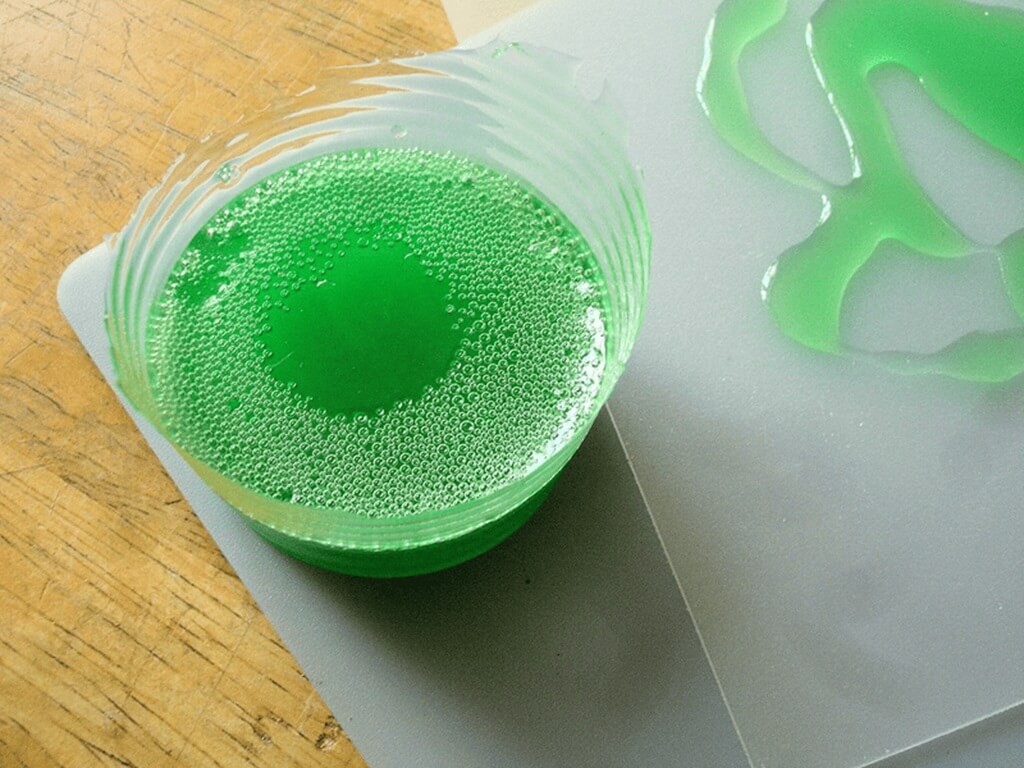
Is Resin in Hair Dangerous?
Most people’s first worry is whether resin in hair can cause real harm, either to their health or to the hair itself. The honest answer depends on the type of resin and how long it sits there, but in the vast majority of cases, this is a cosmetic annoyance rather than a medical emergency.
Is resin in hair toxic? Uncured epoxy resin contains reactive chemicals that can irritate skin and eyes on contact, which is why we always recommend gloves and good ventilation when working with it in the first place. Once resin has fully cured, meaning it has hardened and the chemical reaction is complete, it becomes chemically inert and is no longer considered toxic. The concern window is really during the wet, uncured stage. (If you are concerned about chemical exposure or fumes while working on projects, read our safety guide on does epoxy resin smell for workspace ventilation guidelines).
Can it damage hair? Resin itself doesn’t chemically damage hair the way bleach or harsh solvents can. The real risk of damage comes from how people try to remove it, especially pulling on hardened resin or scrubbing wet resin with hot water, which can cause breakage and split ends.
Can it irritate the scalp? If wet resin makes direct contact with the scalp, some people notice mild redness, itching, or a warm tingling sensation. This is more common with certain epoxy formulations that contain stronger hardeners. It usually settles down once the resin is removed and the area is cleaned.
When to seek medical care? Contact a doctor if you notice the skin around the resin blistering, swelling, or becoming increasingly painful, or if you have a known sensitivity to epoxy chemicals and experience any breathing difficulty, which can indicate an allergic reaction. For general itching or mild redness, most people find it resolves on its own within a day once the resin is fully removed.
How Resin Commonly Ends Up in Your Hair?
Before we get to the details of How to get resin out of hair, it helps to know that this is a genuinely common problem, not a sign that something went wrong with your project. In DIY projects, getting resin in hair usually happens in one of a few predictable ways.
- Leaning over an open pour. Checking a mold or a lamp base up close, especially under a work light, is the single most common way resin drips onto hair without anyone noticing until it’s already there. In many cases, people just accidentally dip their hair in wet resin.
- Brushing hair back with a gloved or resin-covered hand. This is an easy habit to fall into mid-project, and it’s how resin ends up transferred well away from the actual work surface.
- Sanding or finishing cured pieces. Fine resin dust from sanding can settle into hair and later feel gritty rather than sticky, which is worth knowing since it changes how it should be treated compared to a wet drip.
- Kids’ craft resin and UV resin kits. Smaller UV resin projects, like jewelry or keychains, tend to happen at close range on a table, which puts hair at a similar height and risk as hands.
If any of these sound familiar, know that the fix ahead is the same regardless of how the resin got there. What matters now is only whether it’s wet or hardened, which we’ll help you check next.
Crafting Tip: If measuring ratios, managing fumes, and avoiding sticky messes feels overwhelming, you can always skip the hassle and explore our collection of fully cured, ready-to-display handmade resin lamps.
Before You Remove Resin From Hair, Check If It’s Wet or Hardened
This step decides everything that comes next, so it’s worth taking thirty seconds to check properly rather than guessing.
How to Tell if the Resin Is Still Wet
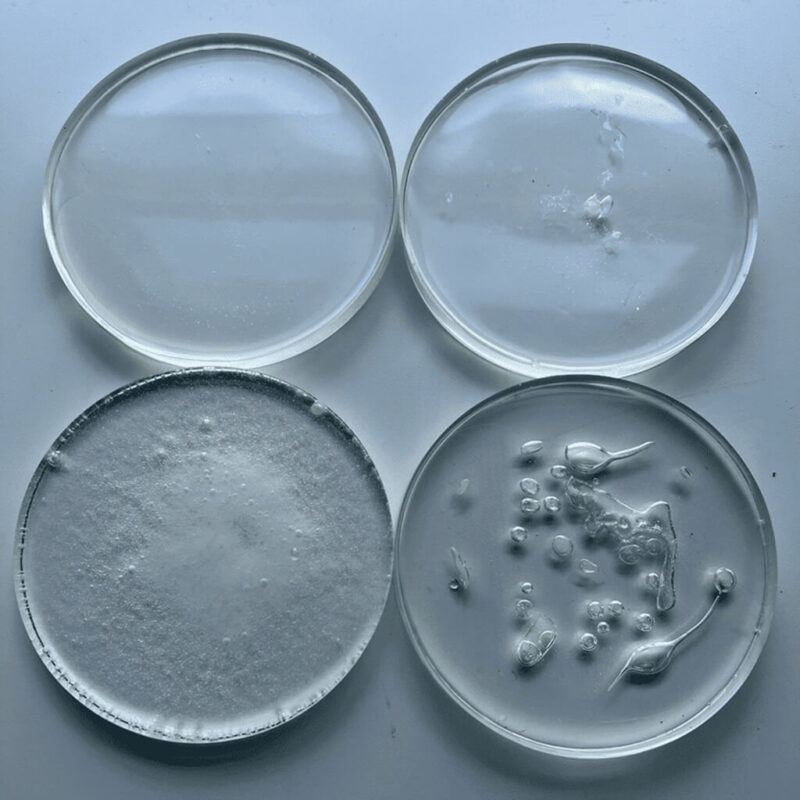
Wet resin looks glossy and slightly translucent, almost like a drop of honey or clear glue sitting on the strands. If you touch it lightly with a gloved finger or a paper towel, it will feel tacky and may stretch into thin strings before separating. It hasn’t fully bonded to the hair shaft yet, which is actually good news, because this stage is the easier one to work with.
How to Tell if the Resin Has Hardened
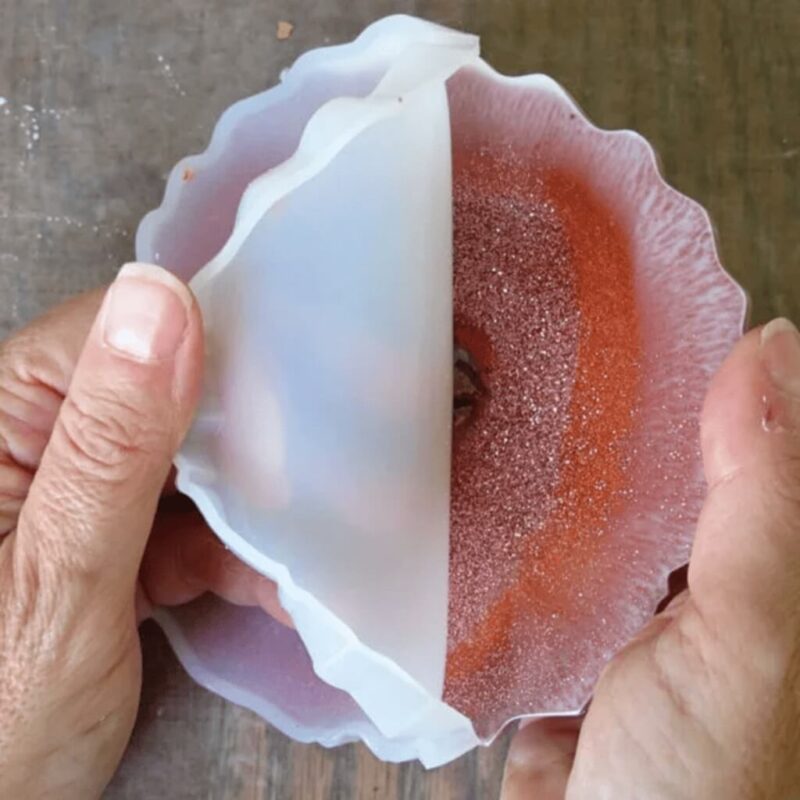
Cured resin feels hard and smooth, almost like a bead of plastic or glass. It won’t stretch or feel sticky no matter how you touch it, and it usually has a defined shape, like a small dome or drip, rather than spreading loosely through the strands. If you can tap it gently with a fingernail and hear a faint click, it has cured.
Why the Condition of the Resin Changes the Removal Method
Wet resin is still soluble in oil and hasn’t locked itself around individual hair strands yet, so it can usually be worked loose and washed out. Hardened resin has physically encased the strands it touched, so soaking it in oil won’t dissolve it.
Instead, the goal shifts to gently breaking it into smaller pieces or sliding it down and off the hair without pulling. Trying to wash hardened resin out like it’s still wet, or trying to peel wet resin off like it’s hardened, is where most of the frustration and hair damage comes from.
How to Get Wet Resin Out of Hair Safely?
Getting wet resin out of hair is the more forgiving scenario, and most people can clear it out in under twenty minutes with things they already have at home.
Step 1. Avoid spreading the resin around your hair in any case
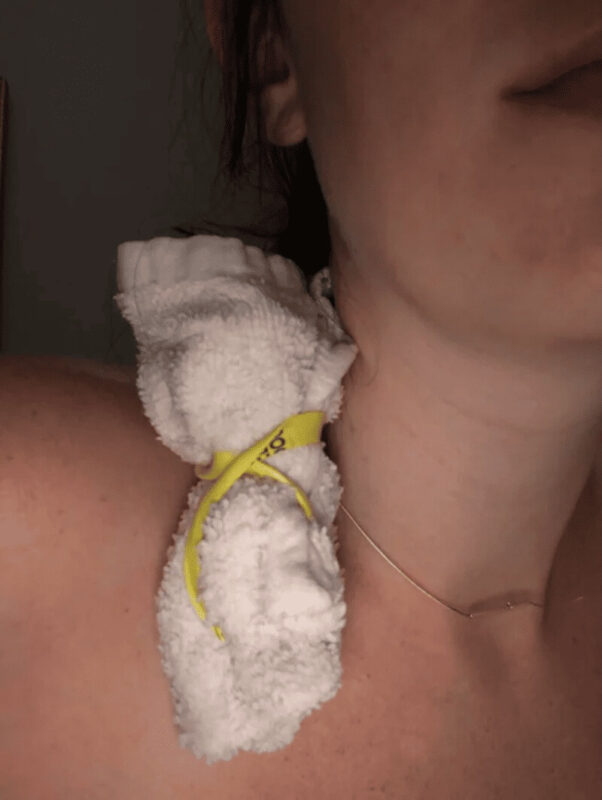
Before doing anything else, gather the affected hair loosely in one hand to stop the resin from transferring to more strands, your clothing, or nearby surfaces. Avoid running your fingers directly through it yet. If you have disposable gloves, put them on now, since uncured resin can also stick to your skin.
Step 2. Apply a hair oil to loosen the resin
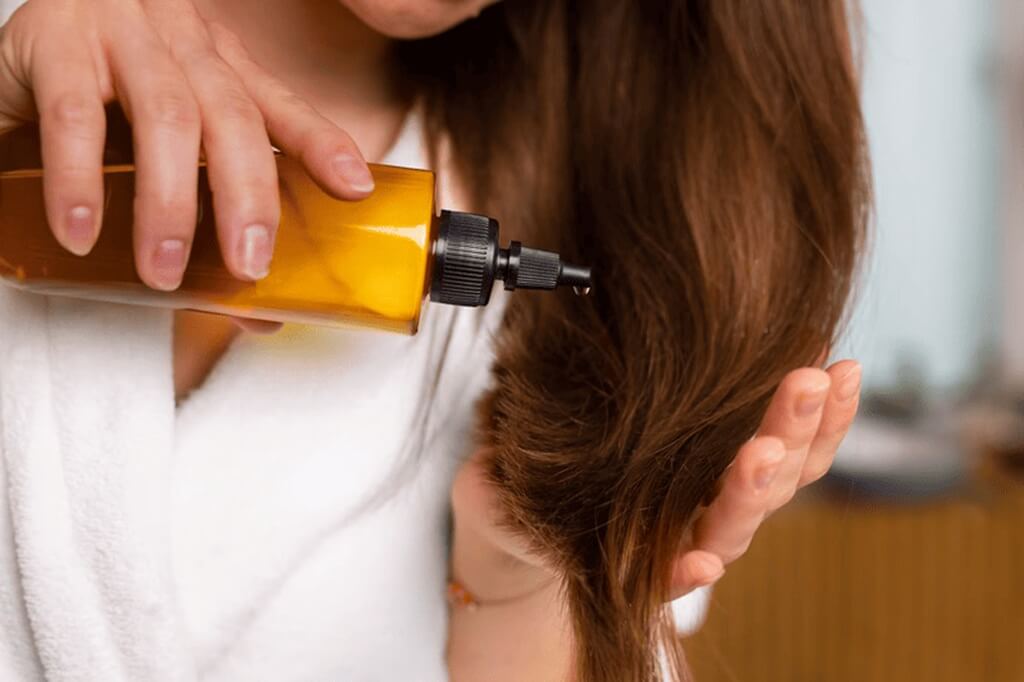
Coconut oil, olive oil, or baby oil all work well here. Apply a generous amount directly onto the resin and the hair immediately around it, then let it sit for about ten to fifteen minutes.
Oils work because uncured resin is an organic compound that hasn’t cross-linked into a solid polymer yet, meaning its molecular structure is still loose enough to be broken down by other organic compounds like oil.
The oil essentially gets in between the resin and the hair shaft, reducing the resin’s grip so it stops clinging to individual strands. This is the same principle behind using oil to remove sticker residue or gum, both of which rely on a similar loosening effect rather than a chemical reaction.
Step 3. Gently separate the hair
After the oil has had time to sit, use a wide-tooth comb or your fingers to slowly work through the strands, starting from the ends and working upward. Go slowly and stop at the first sign of resistance rather than pulling through it. The resin should feel noticeably softer and looser than when you started.
Step 4. Rinse your hair with shampoo till it’s gone
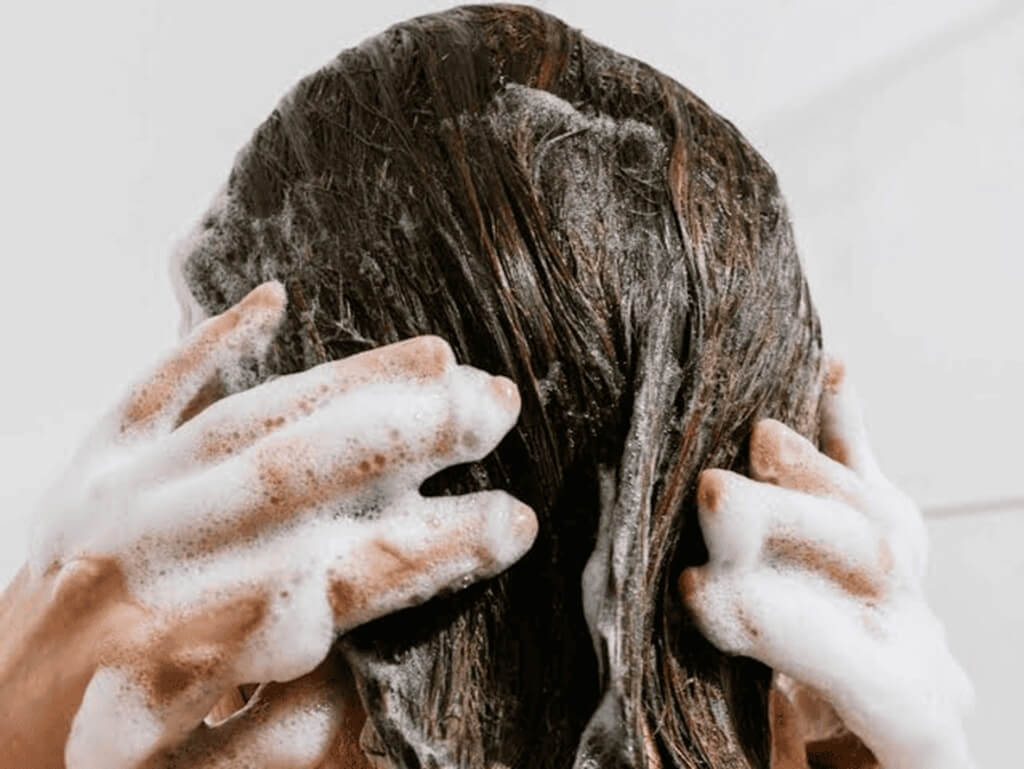
Wash the area with a regular clarifying shampoo, which is formulated to cut through oil and residue more effectively than a standard moisturizing shampoo. You may need two or three washes to fully clear both the resin and the oil.
Check the hair while it’s damp, since resin residue is easier to spot before it dries.
How to Get Hardened Resin Out of Hair without Cutting or Damaging it?
Getting hardened resin out of hair takes more patience than the wet-resin method, but it’s still very rarely a reason to cut a large section of hair.
Can Hardened Resin Be Removed?
Yes, in most cases. Cured resin is brittle rather than flexible, which means small amounts can usually be cracked and flaked off in pieces rather than needing to be dissolved or cut away entirely. The exception is when the resin has fully surrounded a thick chunk of hair close to the scalp, which we’ll cover below.
Option 1: Remove small pieces without pulling the hair
Hold the hardened resin firmly between your thumb and finger, close to where it’s attached to the hair, and gently flex or twist it rather than pulling straight down. Because cured resin is brittle, this motion often causes it to crack into smaller fragments that release the strands underneath more easily. Work through it in small sections rather than trying to remove the whole piece in one go, and pause to check how much hair, if any, is still caught inside each fragment before continuing.
Option 2: When cutting a small section is the safest option
If the resin has hardened into a solid clump wrapped tightly around a section of hair, particularly near the scalp where there’s little slack to work with, cutting that small section is often the safer choice compared to forcing it apart.
This isn’t the same as cutting off a large section of hair. In most cases, it means trimming a piece no bigger than the resin clump itself, which is far less noticeable than the breakage that can come from repeated pulling.
What Not to Do When Removing Resin From Hair?
A few instinctive reactions actually make resin removal harder, so it helps to know them in advance.
- Don’t wash with water first. Water doesn’t break down resin and can cause wet resin to spread further through the hair before it’s had a chance to loosen with oil.
- Don’t pull hardened resin. Pulling transfers force directly to the hair shaft, which is how strands snap or come out at the root.
- Don’t use harsh chemicals. Products like acetone or paint thinner can dissolve resin, but they can also strip natural oils from hair and irritate the scalp, so they should only be considered as a last resort, in small amounts, and kept away from the scalp entirely.
- Don’t overheat the resin. Using a hair dryer or hot water to try to soften hardened resin can actually cause it to bond more tightly as it cools back down, and it risks burning the scalp.
- Don’t panic and cut off large sections immediately. Cutting is sometimes necessary, but it should be the last step after oil treatment and gentle separation have been tried, not the first reaction.
Can You Use Acetone or Other Solvents to Remove Resin From Hair?
Solvents can technically dissolve resin, but they come with real tradeoffs for hair and scalp health. Here’s how the common options compare.
| Solvent | Effectiveness on Resin | Risk to Hair and Scalp | Our Recommendation |
| Acetone | Very effective at dissolving both wet and cured resin | Strips natural oils, can dry out hair and irritate skin with prolonged contact | Only for small hardened spots, applied briefly and rinsed out right away |
| Isopropyl alcohol | Effective on wet resin, less effective once fully cured | Drying to hair, mild irritation possible on sensitive scalps | Reasonable backup for wet resin if oil alone isn’t cutting through it |
| Nail polish remover | Similar to acetone since most formulas contain it | Same drying and irritation risks as acetone, sometimes with added fragrance that increases sensitivity | Use only if pure acetone isn’t available, and choose an acetone-based rather than acetate-based formula |
| Hair oils (coconut, olive, baby oil) | Effective on wet resin, minimal effect on fully cured resin | Very low risk, safe for scalp contact | Best starting point for almost every case |
For most people, starting with oil and only reaching for a solvent if the resin genuinely won’t budge is the approach that protects hair health the best.
Note: Do not use wax to get resin out of your hair. It will make the situation worse rather than fixing anything.
What to Do if You Still Can’t Get Resin Out of Hair
If the resin is holding firm after a first attempt, there are still several good options before considering anything drastic.
- Repeat the oil treatment. Sometimes a single application isn’t enough, especially with a thicker or larger deposit of resin. Reapplying oil and letting it sit for a longer period, even overnight with a shower cap over it, often finishes the job that a quick fifteen-minute treatment started.
- Visit a hairstylist. Stylists deal with product buildup and stuck substances regularly and often have professional-grade clarifying treatments or tools that make safe removal easier, especially for resin that’s close to the scalp.
- Seek medical advice for irritation. If you are practicing DIY casting, review our guide on types of resin for crafts to ensure you are using the safest chemistry for your setup.
How to Get Resin Out of Hair: Frequently Asked Questions
How long can resin stay in hair?
There’s no strict time limit, but the longer resin stays, especially while still wet, the more it tends to spread and bond with surrounding strands. It’s best addressed as soon as reasonably possible rather than left to fully cure if it can be avoided.
Can resin permanently damage hair?
Resin on its own doesn’t chemically damage hair. Damage typically comes from the removal process, particularly pulling on hardened resin or using harsh solvents repeatedly, so a careful removal method matters more than the resin itself.
Will shampoo remove resin?
Shampoo alone won’t dissolve resin, but it is a crucial step after oil has loosened it, helping to wash away both the resin residue and the oil used to treat it.
Can coconut oil remove epoxy resin?
Yes, coconut oil is one of the more effective household oils for loosening wet epoxy resin, since its consistency helps it work between the resin and the hair shaft.
Does UV resin come out of hair differently from epoxy resin?
The same oil-based approach works for both while the resin is still wet, since the removal principle relies on loosening rather than a resin-specific reaction. The main difference is that UV resin only cures under UV light, so it may stay in a workable, wet state longer if kept away from sunlight, giving you a bit more time to treat it before it hardens.
Should I cut my hair if resin hardens?
Cutting is rarely the first step. Most hardened resin can be cracked into smaller pieces and worked out gently. Cutting is really only necessary for a resin clump wrapped tightly around a small section close to the scalp, and even then, it usually only means trimming that small section rather than a large amount of hair.
